
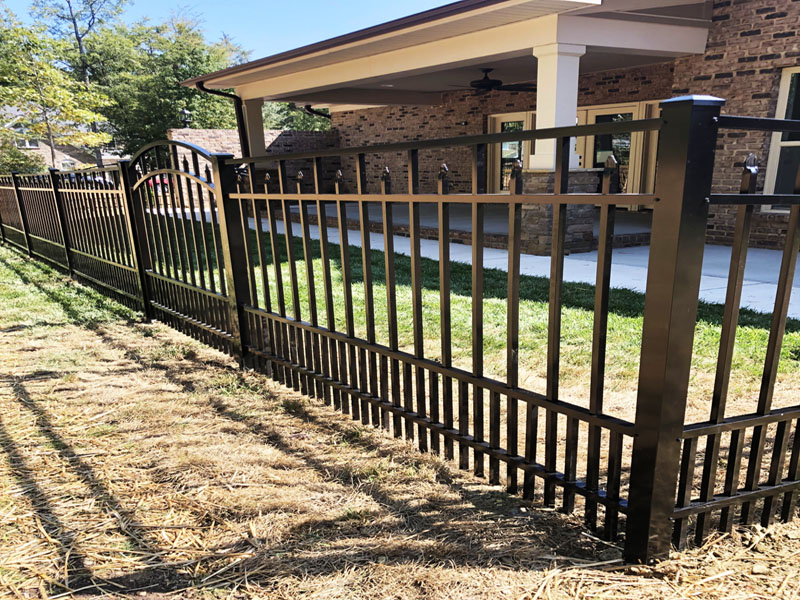
Most homeowners in Allen choose aluminum fencing because you get durable, rust-resistant protection that preserves your property’s curb appeal while requiring minimal maintenance; aluminum also offers strong security without the weight or rot concerns of wood, complies easily with subdivision and HOA standards, and gives you cost-effective longevity that suits local weather and resale values.
Key Takeaways:
- Low maintenance and rust-resistant, making it well suited to Allen, NC’s humid climate without the rot or repainting required by wood fences.
- Durable and cost-effective alternative to wrought iron, offering long service life with lower installation and upkeep costs.
- Available in attractive, customizable styles that comply with subdivision/HOA guidelines while preserving sightlines and boosting curb appeal.
Benefits of Aluminum Fencing
Across Allen subdivisions, aluminum fencingAluminum Fence Installation combines long life, visual flexibility, and cost-effectiveness: it commonly comes in 3-6 ft heights, resists corrosion for 20+ years with powder-coating, and typically requires far less upkeep than wood or steel. You’ll save on repainting and replacement costs, enjoy quick installs thanks to aluminum’s low weight, and meet HOA aesthetics with a wide range of profiles and finishes that maintain value and curb appeal.
Durability and Low Maintenance
Because aluminum doesn’t rust like steel, you get a fence that endures Allen’s humidity and temperature swings with only occasional cleaning; a yearly rinse and inspection is usually sufficient. You’ll avoid staining or replacing boards every few years as with wood, and many manufacturers back powder-coated finishes with 10-20 year warranties, reducing your long-term repair and replacement costs while keeping the fence structurally sound.
Aesthetic Appeal
You can match neighborhood styles easily: aluminum offers profiles from simple ranch rail to ornate picket and ornamental panels, plus 20+ factory colors and accessory options like finials and post caps. Homeowners often choose black or white for classic curb appeal, while custom heights and gates let you balance visibility, security, and design to fit your lot and HOA rules.
More specifically, you can add privacy slats, arched tops, or contrasting post caps to create distinctive entrances; gates can be prehung to match for a seamless look. Contractors note that aluminum’s consistent finish and modular panels simplify site staging and replacements, so you’ll maintain a uniform appearance across a row of homes without frequent touch-ups or mismatched repairs.
Cost-Effectiveness
Aluminum delivers strong value for Allen subdivisions by combining moderate upfront costs with low upkeep: typical installed prices run $20-40 per linear foot, and powder-coated finishes often carry 20-year warranties. You avoid frequent repairs and staining required by wood, and you sidestep rust treatments needed for wrought iron, which lowers your total cost of ownership while keeping properties attractive to buyers and HOAs.
Long-Term Savings
Aluminum’s upfront cost typically runs between $20-40 per linear foot installed, yet you save over time because it needs virtually no painting or sealing. You avoid recurring wood staining (every 2-3 years) and iron repainting, so your maintenance bills drop by hundreds to thousands over a decade. Warranties often span 20 years, and many Allen subdivisions see aluminum fences retain curb appeal longer, improving resale value.
Comparison to Other Fencing Materials
Compared with wood, vinyl, chain-link and wrought iron, aluminum balances cost and aesthetics: aluminum resists rot and rust unlike wood and iron, and costs less than wrought iron. Chain-link may be cheaper ($5-15/ft) but offers less curb appeal; vinyl ranges $25-45/ft and can warp in extreme heat. Your best value often comes from aluminum’s low upkeep and consistent look over 20-30 years.
Material Comparison
| Material | Notes |
|---|---|
| Aluminum | Low-maintenance, powder-coated, $20-40/ft, 20-30 years |
| Wood | Lower initial cost $15-30/ft, needs staining/repair, 10-15 years |
| Vinyl | Low maintenance, can warp, $25-45/ft, 20-30 years |
| Wrought Iron | High-end look, rusts without care, $30-100/ft, 30+ years with upkeep |
| Chain-Link | Cheapest $5-15/ft, minimal privacy/curb appeal, 15-20 years |
You should weigh lifecycle costs, not just upfront price: aluminum’s powder-coat avoids repainting, saving roughly $200-800 per 100 ft over 10 years compared with iron, and avoids wood replacement every 10-15 years. For HOA-driven design standards in Allen, aluminum often meets requirements while delivering the lowest total cost of ownership.
Maintenance & Costs
| Material/Task | Typical Cost & Frequency |
|---|---|
| Aluminum | Wash yearly; DIY <$0.50/ft; pro cleaning ~$0.50-1/ft |
| Wood | Stain/paint every 2-3 years; professional ~$1-3/ft; repairs common |
| Vinyl | Clean every 1-2 years; pressure wash DIY; occasional panel repair if cracked |
| Wrought Iron | Repaint/sand every 5-7 years; prep and paint ~$1-4/ft |
| Chain-Link | Minimal cleaning; posts/panels may need replacement after 15-20 years |
Safety and Security Features
Aluminum fences let you specify security elements like 3-6 foot heights, 3-4 inch picket spacing to block passage, and lockable gates with tamper-resistant hardware. Their noncorrosive alloy and powder-coated finish preserve strength and reduce weak points over time, while reinforced posts set in concrete and 1-2 horizontal rails deliver long-term resistance to impact and attempted entry.
Enhanced Property Protection
You gain visible perimeter control that deters opportunistic intruders; a 4-6 foot aluminum fence with keyed hardware and a welded gate makes casual access harder. Mounting camera or keypad brackets on standard 2.5-3 inch posts is simple, and adding privacy panels or decorative spear tops increases delay for trespassers. Specify commercial-grade hinges and deadbolts for greater forced-entry resistance.
Child and Pet Safety
You can protect kids and pets with 3-4 inch picket spacing, self-closing and self-latching gates with latches positioned 48-54 inches high to limit toddler reach, and a 4-5 foot fence height for play areas. Smooth top rails reduce climb points, and aluminum’s rust-free edges avoid the cut hazards common with corroded metals.
For escape prevention address the base: bury the fence edge in a 6-12 inch trench or add a tensioned bottom rail, and install 1/2-1 inch mesh panels for very small pets. Fit self-closing, self-latching gates and place latches out of reach. Many Allen homeowners choose a 5‑foot, 3‑inch‑spacing installation with a buried footer to stop digging dogs while keeping sightlines for supervision.
Environmental Considerations
Aluminum fencing scores well environmentally: aluminum is infinitely recyclable, recycling uses up to 95% less energy than primary production, and durable finishes cut replacement cycles, lowering lifecycle impacts. If you prioritize lower landfill waste and reduced mining for bauxite, aluminum often outperforms alternatives; its light weight also reduces transportation emissions. For Allen subdivisions, that translates into a practical, lower-impact perimeter solution you can maintain for decades.
Recyclability of Aluminum
Recycling keeps fence panels out of landfills: you can recycle aluminum repeatedly without quality loss, and remelting scrap uses up to 95% less energy than producing primary metal. Recycling reduces demand for bauxite mining and associated habitat loss, and reclaimed post-consumer content often re-enters the supply chain quickly, so your old panels may become new products with minimal processing.
Eco-Friendly Manufacturing Practices
Manufacturers increasingly adopt measures you should look for: closed-loop water systems, electric induction furnaces, and low-VOC powder coatings that eliminate solvent emissions; these practices cut wastewater and air pollutants while extending coating life. Choosing suppliers with documented recycled-content percentages and energy-efficient processes reduces your fence’s embodied emissions.
Ask suppliers for Environmental Product Declarations (EPDs) or ISO 14001 certification so you can compare embodied carbon and recycled content; manufacturers that switch to renewables or buy green power have reported noticeable reductions in carbon intensity, often in double-digit percentages, and warranties tied to powder-coated finishes demonstrate practical, long-term environmental returns you can quantify.
Customization Options
You can tailor aluminum fencing by height (commonly 3-6 ft in subdivisions), picket spacing (typically 2-4 inches), gate style (single, double, swing, or slide) and ornamental accents like scrolls or rings. Local HOAs often require specific heights and finishes, so matching specs avoids fines; installers frequently deliver custom panels in 2-4 week lead times for stocked colors and 4-8 weeks for fully custom orders.
Design Versatility
Whether you want classic picket, contemporary horizontal, ranch-style, or estate-grade looks, aluminum panels come in modular sections and custom bends for slopes. You can add features such as integrated lattice, privacy inserts, or pool-compliant spacing to meet code; many homeowners combine a 4 ft front-yard decorative rail with a 6 ft backyard privacy configuration for cohesive curb appeal and function.
Color and Finish Choices
Common colors include black, bronze, and white, with the option for custom RAL shades; most manufacturers use powder-coating with warranties often ranging from 10-20 years. You can match your fence to shutters or brickwork, and choosing a high-performance finish reduces chalking and fading in North Carolina sun and humidity.
For enhanced durability, select finishes meeting AAMA standards: AAMA 2604 is suitable for typical suburban exposure, while AAMA 2605 is recommended when you want superior color retention and gloss for long-term value. Textured (hammer-tone) and matte options hide minor scratches, and touch-up kits or aerosol repairs handle small chips; annual mild soap washing preserves appearance and extends the warranty-covered life of your finish.
Local Regulations and Compliance
Understanding Zoning Laws
Zoning in many Allen subdivisions separates front-yard and rear-yard rules: you’ll usually see a maximum 4-foot height in front yards and up to 6-foot in rear/side yards, plus setback requirements from sidewalks and easements. Homeowners associations often add style restrictions on picket spacing, post caps, and color, so you should review both the municipal zoning code and your HOA covenants before ordering materials to avoid having to alter a finished fence.
Permitting Process in Allen, NC
You’ll typically submit a short application to the city or county building department with a site plan, property survey, and fence elevation; review often takes 1-3 weeks and fees commonly range from $50-$250. Inspections are usually required after installation, so factor permits and inspection timing into your project schedule to avoid delays.
Start by confirming HOA approval, then prepare a scaled plot plan showing property lines, existing structures, and the proposed fence line; include material specs and post spacing. If your fence encroaches on a public utility easement or needs a higher height, you can request a variance-expect a hearing and a 4-8 week timeline. Also, call 811 before you dig to avoid hitting underground utilities; typical post depths are 24-36 inches for aluminum fences to meet wind-load standards in this region.
To wrap up
If you want a fence that looks great, meets subdivision and HOA standards, and holds up for decades in Allen’s climate, aluminum fencing is one of the smartest choices you can make. With its rust resistance, low maintenance requirements, and flexible design options, aluminum delivers long-term value without sacrificing curb appeal or safety.
When installation quality matters, working with an experienced local contractor makes the difference. Elite Fence North Carolina specializes in professional aluminum fence installation for Allen, NC homeowners and subdivisions. Our team understands local zoning rules, HOA guidelines, and proper installation methods to ensure your fence is compliant, secure, and built to last.
We handle the entire process, from layout and permitting guidance to precise post setting and clean final installation. Whether you need a decorative front-yard fence, a secure backyard enclosure, or a subdivision-approved perimeter, we deliver consistent workmanship and dependable results.
If you are planning an aluminum fence installation in Allen, NC, contact Elite Fence North Carolina to schedule a consultation and get a clear, honest estimate. We are ready to help you protect your property, enhance curb appeal, and install a fence you can rely on for years to come.