
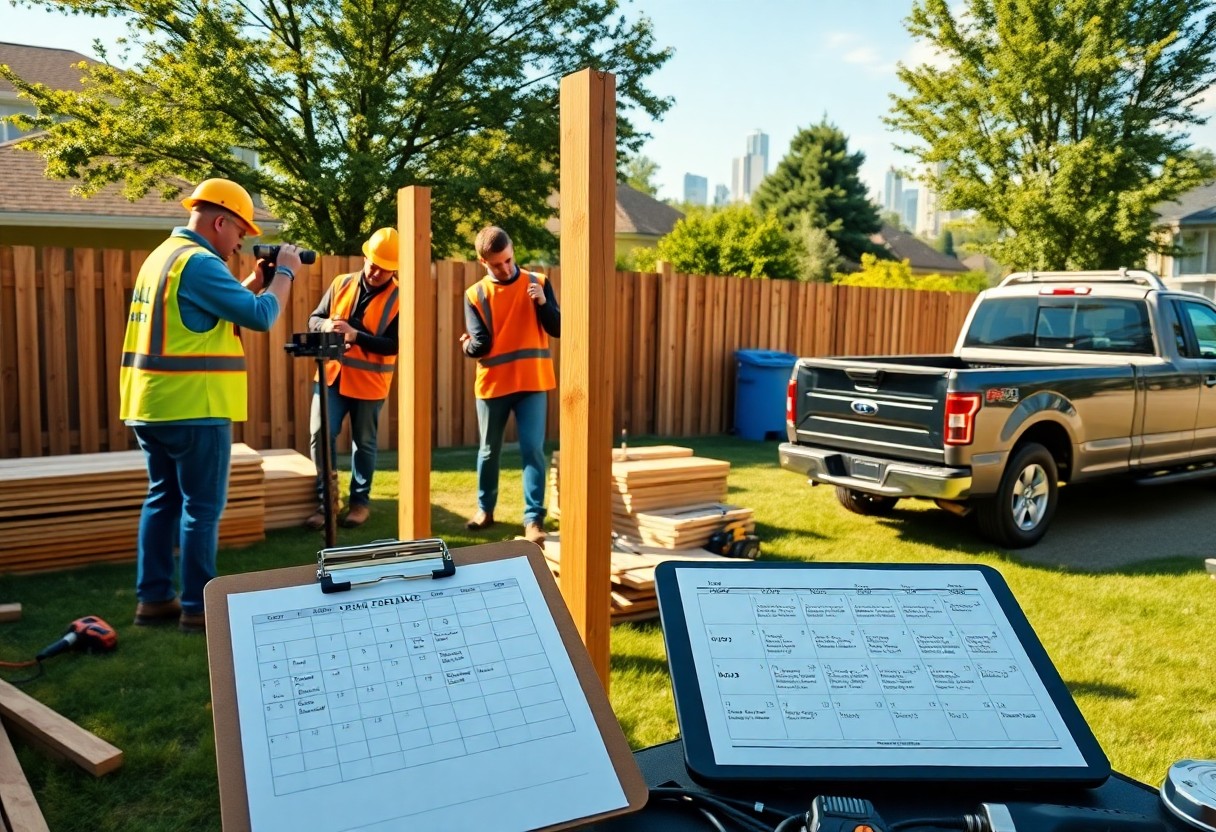
There’s usually a 1-5 day timeline for wood fence installation in Charlotte, NC; you should plan for utility and digging hazards, secure required permits, and know that experienced crews often deliver a fast, quality install within that window.
Key Takeaways:
- Typical complete timeline: 2-8 weeks from first contact to finished fence, with permits and scheduling often taking 1-6 weeks and on-site installation usually 1-4 days for a standard residential job.
- On-site work breakdown: day 1 – layout and post holes; day 2 – set posts and concrete; day 3 – install rails and pickets; day 4 – gates, trim, staining/cleanup; larger or complex sites add days.
- Common delay factors: permitting/HOA approvals, wet weather, rocky or sloped soil, underground utilities, and custom materials or repairs.
Pre-Installation: Permits and Planning in Charlotte
Planning your permits and site plan early saves time; in Charlotte you should apply for city permits and check HOA rules to avoid permit delays and fines. You’ll typically allow 1-3 weeks for approvals before crews arrive.
Navigating Local Zoning and HOA Approvals
Check HOA covenants and Charlotte zoning codes early; you may need written approval, design reviews, or height variances. If you skip this step you risk project holds or fines.
Utility Marking and Property Line Identification
Call 811 before digging so utilities get marked; confirm property lines with a survey to avoid utility strikes and costly fixes. Expect marking to take 2-7 days.
Verify the locator paint marks against your survey lines and ask the crew about any ambiguous markers; if the boundary remains unclear, hire a licensed surveyor to set pins to prevent boundary disputes and expensive rework. Allow extra time for survey scheduling, permit hold-ups, and utility company response windows so your install stays on schedule.
Material Sourcing and Lead Times
Supply chains in Charlotte often add 1-3 weeks; you should plan for two to six week lead times on specialty lumber and hardware, especially during spring demand or after major storms.
Availability of Treated Pine and Western Red Cedar
Treated pine is generally available year-round, so you can expect shorter waits, while Western Red Cedar often faces seasonal backorders and higher costs that can extend lead times.
Custom On-Site Builds vs. Prefabricated Panels
Prefabricated panels let you finish typical yards in a few days, so you’ll save time; on-site custom builds require more layout, cuts and adjustments and add several days to the schedule.
Custom on-site builds give you a precise fit and finish tailored to your property, but expect crews to spend extra time on layout, individual pickets, and coping uneven boundaries. Site issues like grading, hidden concrete, or rotted posts can add several days. If you pick prefab panels, you trade some flexibility for speed; prefab often reduces installation time by 30-70% on standard lots.
Phase One: Site Preparation and Post Setting

Your crew will clear, grade, and set posts, usually in 1-2 days for an average yard; heavy brush or rocky soil can add time, while properly set posts prevent future repairs.
Clearing the Fence Line and Grading
Clearing brush and roots takes a few hours per 100 feet; you must mark property lines and call 811 before mechanical work, and grading creates a consistent slope to avoid standing water.
Digging and Anchoring Posts in Piedmont Clay
Digging in dense Piedmont clay slows progress-you’ll spend 30-45 minutes per hole with an auger, longer if you hit rock; use concrete footings for stability.
Expect stubborn clay and buried roots to blunt standard augers; when rock appears, rent a hydraulic auger or hire a pro with an air hammer. You should set posts on at least 4-6 inches of gravel for drainage, pour concrete up to a few inches above grade, and brace posts until the concrete cures to avoid shifting.
Phase Two: Framing and Picket Attachment
Crew will set horizontal rails and attach pickets once posts are secure, typically taking a day for average yards; you should watch for unlevel posts that cause alignment issues and slow work, while proper bracing yields clean, fast progress.
Installing Horizontal Rails and Structural Support
Teams set rails level, fastening with galvanized brackets and screws; you should check spacing and screw length to prevent structural failure, and use temporary bracing so you can confirm post plumb before picket work begins.
Precision Picket Placement and Gate Integration
Pickets are aligned to your layout, measured for consistent gaps, and pre-drilled to prevent splitting; you should integrate gate hardware early to verify clearances and secure smooth operation.
Measure each picket gap with a spacer (3/8″-1/2″) and snap a chalk line so you can nail consistently; you should clamp pickets, pre-drill screw holes, and test gate fit with temporary hardware-heavy gates can pinch or sag, so install reinforced hinges and adjust the latch to ensure reliable, long-term function.
Environmental Factors and Weather Delays
- wood fence installation
- Charlotte, NC
- weather delays
- humidity
- soil saturation
Weather in Charlotte can push your timeline; heavy rain or storms can halt work and extend projects by days. You should expect flexible scheduling and contingency days in estimates. Recognizing that prolonged wet spells and high winds cause the biggest delays helps you plan realistic start dates.
Managing Charlotte’s Humidity and Seasonal Rainfall
Humidity in Charlotte slows wood drying and increases staining cure times; you should avoid finishing during peak humidity to prevent mold and warping. Schedule work in drier windows to protect finish longevity and keep crews productive.
Impact of Soil Saturation on Installation Stability
Soil saturation weakens post holes and can cause post instability, requiring re-drilling or concrete delays; you should delay setting posts until soil drains or add gravel to improve drainage.
When heavy saturation persists after storms, you may face collapsed holes, sinking posts, or need deeper concrete footings; crews often wait 24-72 hours, use temporary pumps or install gravel trenches. You should require verified compaction, longer concrete cure time, and post monitoring to avoid post movement and expensive repairs.
Post-Installation Finishing and Curing
After installation, you should allow posts and panels to settle for a few days before final adjustments; staining or sealing too soon can trap moisture and damage joints. Inspect for shifting and surface dampness before proceeding.
Necessary Curing Time for Structural Integrity
Posts set in concrete need 48-72 hours to support light work; you should wait at least 7 days before stressing the fence, and allow up to 28 days for full concrete cure if you expect heavy loads.
Optimal Scheduling for Sealing and Staining
Timing for sealing and staining usually means you wait 2-4 weeks for pressure‑treated wood to dry or test moisture under 15%; pick a stretch of dry weather and avoid staining before rain.
Choose a quick moisture test or meter; you should apply stain between 50-85°F in shaded conditions, use thin coats for absorption, and keep surfaces dry 24-48 hours after application to ensure adhesion and color longevity.
Conclusion
Wood fence installation in Charlotte, NC is usually fast once the crew is on-site, but the full schedule depends on planning steps that happen before anyone starts digging. Most homeowners see a total timeline of about 2 to 8 weeks from quote to completion, mainly because HOA approvals, permits, utility locates, and material lead times can take a week or more. The actual wood fence install is often 1 to 4 days for an average yard, with extra time added for slopes, rocky spots, wet Piedmont clay, gate builds, or custom work. After the fence is built, plan for concrete curing and let pressure-treated lumber dry before staining or sealing so you get better long-term durability.
If you are searching for wood fence installation timeline Charlotte NC, how long does it take to install a wood fence in Charlotte, fence permit timeline Charlotte NC, or wood privacy fence installation schedule, Elite Fence North Carolina can map out a realistic start date, handle the install efficiently, and build your fence the right way the first time.